
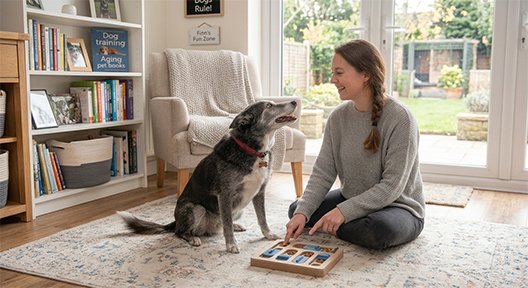
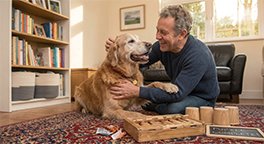
Growing older doesn’t mean your dog’s mind has to slow down.
While many senior dogs become less energetic, they still need mental stimulation. In fact, keeping their brain active can be just as important as physical care as they age.
The good news? You don’t need expensive toys or complicated training. Many of the best brain games for senior dogs use simple household items, a few treats, and just a few minutes of your time.
In this guide, you’ll discover 15 easy, senior-friendly brain games that help reduce boredom, support cognitive health, and keep your dog engaged — without putting stress on aging joints.
At a Glance
| Quick Facts | |
|---|---|
| Mental stimulation is just as important as physical exercise for senior dogs. | |
| Brain games encourage curiosity, problem-solving, and confidence. | |
| Most activities take only 5–15 minutes. | |
| Keep sessions short and enjoyable to avoid frustration. | |
| Choose games that match your dog’s mobility and abilities. | |
| Mental enrichment complements—but does not replace—veterinary care for dogs with Canine Cognitive Dysfunction (CCD). |
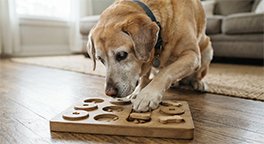
Why Brain Games Matter for Senior Dogs
Just like people, dogs benefit from using their brains throughout life. For senior dogs, mental stimulation becomes especially important as physical activity naturally decreases.
Regular brain games can help:
- Reduce boredom and restlessness
- Build confidence
- Encourage gentle movement
- Support memory and learning
- Strengthen the bond between you and your dog
- Provide a positive outlet when exercise is limited
Brain games won’t prevent aging or cure Canine Cognitive Dysfunction (CCD), but they can be a simple, enjoyable part of a well-rounded routine that supports your dog’s overall wellbeing.
Simply Chea Tip
The goal isn’t to make the games difficult — it’s to make them enjoyable. Success builds confidence, while frustration can have the opposite effect.
Practical Help for Your Senior Dog
If you’re looking for practical ways to make daily life easier for an aging dog, we’ve organized our recommended senior-dog essentials by comfort, mobility, joint support, and enrichment.
→ Explore the Senior Dog Essentials Guide
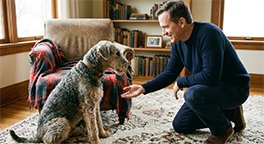
How to Choose the Right Brain Game
Every senior dog is different.
Before introducing a new activity, consider your dog’s:
- Mobility
- Vision
- Hearing
- Energy level
- Confidence
- Previous training experience
If your dog has arthritis, choose games that involve sniffing or gentle problem-solving rather than running or jumping.
If your dog has reduced vision, use scent-based activities instead of visual puzzles.
For dogs showing signs of Canine Cognitive Dysfunction, keep activities simple, predictable, and rewarding.
Short sessions of five to ten minutes are usually enough.
It’s better to finish while your dog is still enjoying the game than to continue until they become tired or frustrated.
15 Brain Games Your Senior Dog Will Love
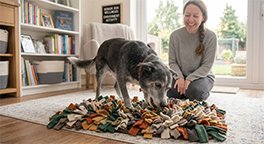
1. Snuffle Mat
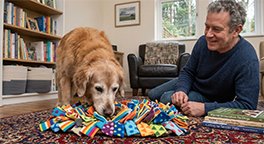
A snuffle mat encourages your dog to use their nose to search for hidden treats among soft fabric strips.
Sniffing is mentally stimulating, naturally calming, and suitable for dogs with limited mobility.
Difficulty: ★☆☆☆☆
Best for:
- Arthritis
- Reduced mobility
- Dogs with vision loss
- Beginners
2. Treat Treasure Hunt
Hide a few treats around one room and encourage your dog to find them using their nose.
Start with easy hiding places before making the game slightly more challenging.
Difficulty: ★★☆☆☆
Best for:
- Curious dogs
- Dogs that enjoy sniffing
- Indoor enrichment
3. Muffin Tin Puzzle
Place treats inside a muffin tin and cover some holes with tennis balls or soft toys.
Your dog must work out how to remove the covers.
Difficulty: ★★☆☆☆
Best for:
- Problem solving
- Food-motivated dogs
4. The Cup Game
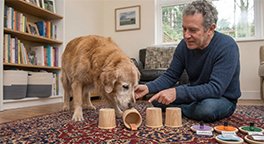
Hide a treat under one of three cups.
Shuffle them slowly and encourage your dog to find the correct one.
Difficulty: ★★☆☆☆
Best for:
- Concentration
- Confidence building
5. Find the Toy
Hide your dog’s favourite toy nearby and ask them to “Find it.”
Use scent as the primary clue.
Difficulty: ★★☆☆☆
Best for:
- Dogs with good sense of smell
- Indoor play
6. Frozen Lick Mat
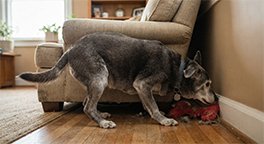
Spread dog-safe yogurt, pumpkin puree, or wet food onto a lick mat and freeze it.
Licking is naturally calming and provides gentle mental stimulation.
Difficulty: ★☆☆☆☆
Best for:
- Hot weather
- Anxious dogs
- Quiet evenings
7. Gentle Scent Trail
Create a short scent trail using treats across the floor.
Allow your dog to slowly follow the trail.
Difficulty: ★★☆☆☆
Best for:
- Dogs with reduced vision
- Dogs that enjoy sniffing
8. Food Dispensing Toys
Instead of feeding from a bowl, place part of your dog’s meal into an easy puzzle feeder.
This encourages slow eating while providing mental exercise.
Difficulty: ★★☆☆☆
Best for:
- Daily enrichment
- Dogs that eat too quickly
9. Cardboard Box Search
Place treats inside a shallow cardboard box filled with scrunched paper.
Allow your dog to investigate and uncover the treats.
Difficulty: ★★☆☆☆
Best for:
- Indoor enrichment
- Rainy days
10. Name Recognition
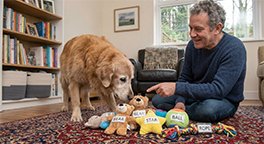
Gather several familiar toys.
Ask your dog to find one by name.
Even if your dog only knows one or two names, this remains excellent mental exercise.
Difficulty: ★★★☆☆
Best for:
- Experienced dogs
- Gentle training sessions
11. Refresh Old Tricks
Older dogs often enjoy practising familiar commands like:
- Sit
- Paw
- Touch
- Spin (if physically comfortable)
- Nose target
Short sessions keep the brain active without learning entirely new behaviours.
12. Which Hand?
Hide a treat inside one hand.
Present both fists.
Reward your dog for choosing correctly.
Simple.
Fun.
Mentally stimulating.
13. Gentle Indoor Obstacle Course
Use cushions, rolled towels, or household objects to encourage slow weaving or careful stepping.
Avoid jumps or anything that places stress on aging joints.
14. Interactive Feeding
Scatter kibble across the lawn or hide small portions throughout the house.
Meals become enrichment instead of simply eating from a bowl.
15. Relaxation Enrichment
Not every brain game needs to be exciting.
Gentle brushing.
Quiet sniffing walks.
Watching birds from the garden.
Exploring a new safe environment.
These all stimulate the brain while reducing stress.
Which Games Are Best for Dogs with Canine Cognitive Dysfunction?
Dogs with CCD often benefit most from activities that are:
- Predictable
- Familiar
- Rewarding
- Low stress
Good choices include:
✅ Snuffle Mats
✅ Lick Mats
✅ Gentle Scent Trails
✅ Refreshing familiar commands
Avoid games that become frustrating or require complicated problem-solving.
The goal is engagement—not confusion.
Simply Chea Tip
If your dog becomes frustrated, simplify the activity immediately. Success builds confidence and encourages your dog to keep participating.
Games to Avoid
Not every enrichment activity is suitable for older dogs.
Avoid:
- High jumps
- Fast agility courses
- Slippery floors
- Complex puzzle toys that cause frustration
- Long sessions that leave your dog exhausted
Remember:
Brain games should leave your dog interested—not overwhelmed.
A Simple Weekly Brain Game Schedule
| Day | Activity |
|---|---|
| Monday | Snuffle Mat |
| Tuesday | Treat Treasure Hunt |
| Wednesday | Lick Mat |
| Thursday | Cup Game |
| Friday | Gentle Scent Trail |
| Saturday | Find the Toy |
| Sunday | Quiet Nature Walk & Sniffing |
Rotating activities helps keep them fresh and interesting.
Frequently Asked Questions
How often should I play brain games with my senior dog?
Five to fifteen minutes once or twice a day is usually enough. Short, enjoyable sessions are more effective than long ones.
Can brain games prevent dementia?
No. Brain games cannot prevent Canine Cognitive Dysfunction, but they may help keep your dog mentally engaged and improve quality of life.
What if my dog loses interest?
Try an easier activity, use higher-value treats, or shorten the session. The goal is enjoyment, not perfection.
Are puzzle toys safe for senior dogs?
Yes, provided they are appropriate for your dog’s size, mobility, and chewing habits. Start with simple puzzles and increase the challenge only if your dog remains confident and engaged.
Related Guides
Continue learning with these Simply Chea resources:
- Senior Dog Anxiety & Cognitive Health: The Complete Guide
- Canine Cognitive Dysfunction (CCD) in Senior Dogs
- The Truth About Arthritis and Joint Pain in Dogs
- Why Is My Senior Dog Suddenly Anxious?
- Creating a Calm Home for an Anxious Senior Dog
- How To Help a Senior Dog Sleep Through The Night
References
This article was written using current veterinary guidance and educational resources, including information from:
- American Animal Hospital Association (AAHA)
- American College of Veterinary Behaviorists (ACVB)
- WSAVA Global Nutrition Guidelines
- Merck Veterinary Manual
- Veterinary Partner (VIN)
Final Thoughts
Growing older doesn’t mean your dog’s days of learning and discovery are over.
In many ways, mental enrichment becomes even more valuable during the senior years. A few minutes spent playing a simple brain game can provide stimulation, build confidence, and create meaningful moments that strengthen the bond between you and your dog.
The best brain games aren’t necessarily the most complicated—they’re the ones your dog enjoys. By matching activities to your dog’s abilities and keeping sessions positive, you’re giving them opportunities to stay curious, engaged, and mentally active.
Remember that enrichment works best as part of a complete healthy-aging plan. Combined with good nutrition, regular veterinary care, gentle exercise, and a loving home, brain games can help your senior dog enjoy a happier and more fulfilling life.
Disclaimer
This article is for general information only and is not veterinary advice. We are not veterinarians. Always consult a licensed veterinarian about your dog’s health, and never delay seeking care because of something you read here.
Last updated: July 2026. We research independently. Some links are affiliate links — this costs you nothing and helps fund our work.

One Response