
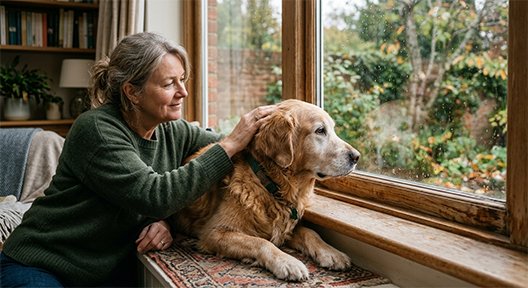
There comes a moment many senior dog owners never expect.
Your dog has always known exactly where the back door is. They’ve followed the same bedtime routine for years. Then something changes.
Perhaps they begin wandering through the house at night. Maybe they stand staring at a corner for several minutes, or seem unsure how to navigate furniture they’ve passed thousands of times before.
At first, it’s easy to dismiss these moments as part of growing older. Sometimes they are. But when confusion, memory loss, altered sleep patterns, or unusual anxiety become more frequent, your veterinarian may mention Canine Cognitive Dysfunction (CCD).
Hearing those words can be frightening. The good news is that a diagnosis of CCD doesn’t mean your dog’s happy days are over. Many dogs continue enjoying life for months or even years with thoughtful care, a predictable routine, and veterinary support.
This guide explains what CCD is, what to expect as it progresses, and practical ways you can help your dog stay comfortable and connected.
At a Glance
- CCD is similar to dementia in humans.
- It affects memory, sleep, and behavior.
- There is no cure, but treatment can improve quality of life.
- Early diagnosis is important.
- Many dogs continue living happily with the right support and care.
This guide explains what happens during diagnosis, what to expect as the condition progresses, and how you can help your dog continue living comfortably.
What Is Canine Cognitive Dysfunction?

Canine Cognitive Dysfunction is an age-related disease that affects the brain.
As dogs grow older, changes occur inside the brain that can affect memory, awareness, learning, and normal behavior.
Unlike simple aging, CCD changes the way the brain processes information.
Dogs don’t forget because they’re being stubborn.
They’re experiencing physical changes within the brain that make familiar routines more difficult to understand.
One of the most important things to remember is this:
Your dog is not choosing these behaviors.
They’re responding to a brain that is gradually changing.
Understanding this often helps owners replace frustration with patience and compassion.
How Veterinarians Diagnose CCD
There isn’t a single blood test or scan that confirms Canine Cognitive Dysfunction.
Instead, your veterinarian carefully builds a picture by combining your dog’s medical history, physical examination, and observed behavior.
During your appointment, your veterinarian may:
- Ask about changes in sleeping patterns
- Discuss nighttime pacing or restlessness
- Review appetite and water intake
- Ask about house-training accidents
- Assess vision and hearing
- Perform a neurological examination
- Recommend blood or urine tests to rule out other medical conditions
Conditions such as arthritis, thyroid disease, urinary tract infections, vision loss, or hearing loss can all cause behavior changes that resemble cognitive decline.
This process of ruling out other illnesses is an important part of reaching a diagnosis.
What Does a CCD Diagnosis Mean?
Receiving a diagnosis can feel overwhelming.
Many owners immediately ask:
“How long does my dog have?”
There isn’t one answer.
Every dog progresses differently.
Some dogs experience only mild cognitive changes for years.
Others decline more quickly.
The goal of treatment is not to reverse aging but to maintain your dog’s comfort, confidence, and quality of life for as long as possible.
The Emotional Side of a Diagnosis

One of the hardest parts of Canine Cognitive Dysfunction is watching small pieces of your dog’s personality begin to change.
Many owners describe feeling sadness, frustration, guilt, or even loneliness.
These feelings are completely understandable.
Remember that your dog still recognizes your voice, your touch, and your presence—even if they occasionally seem confused.
The relationship you’ve built over years doesn’t disappear because of a diagnosis.
Your love and consistency remain one of the most comforting parts of your dog’s world.
Practical Ways to Help a Dog with CCD
While there is no cure, there are many ways to make daily life easier.
Keep Daily Routines Consistent
Predictable routines reduce confusion.
Feed meals at the same times each day, maintain regular walks, and keep bedtime as consistent as possible.
Don’t assume “it’s just old age.”
Sudden changes in behavior always deserve a veterinary examination to rule out treatable medical conditions.
See Animal Humane Society CCD for more information.
Avoid Rearranging Furniture
Dogs with cognitive decline rely heavily on familiar surroundings.
Keeping furniture in the same place helps them navigate with greater confidence.
Improve Lighting
Night lights in hallways or near sleeping areas can make nighttime wandering less stressful for dogs with reduced vision or cognitive changes.
Encourage Gentle Mental Activity
Short sniffing games, food puzzles, and gentle exploration can help keep the brain engaged without becoming overwhelming.
Support Physical Comfort
Pain can worsen confusion and anxiety.
Managing arthritis or other age-related conditions with your veterinarian can make a significant difference to your dog’s overall well-being.
Working With Your Veterinarian
Your veterinarian may recommend one or more approaches depending on your dog’s needs.
These could include:
- Prescription medications
- Therapeutic diets
- Omega-3 fatty acids
- Environmental adjustments
- Behavior management strategies
- Regular monitoring
Rather than looking for a single solution, think of treatment as a combination of small improvements that work together to support your dog’s quality of life.
Tracking Changes at Home
One of the most valuable things you can do is keep a simple record of your dog’s daily behavior.
Tracking changes in:
- Sleep
- Appetite
- Mobility
- Anxiety
- House-training
- Restlessness
- Medication
- Mood
helps both you and your veterinarian recognize gradual changes that might otherwise go unnoticed.
Frequently Asked Questions
Can CCD be cured?
No, but symptoms can often be managed.
How long can dogs live with CCD?
Many dogs live months or years depending on severity.
Is CCD painful?
The condition itself isn’t painful, but arthritis and other illnesses often occur alongside it.
Simply Chea Tip
Our Senior Dog Care Binder includes printable behavior trackers, medication logs, quality-of-life assessments, and veterinary record pages designed to help you monitor your dog’s health and share meaningful observations during appointments.
Living Well with CCD
A diagnosis of Canine Cognitive Dysfunction changes the journey, but it doesn’t end it.
Many senior dogs continue to enjoy quiet walks, favorite treats, afternoon naps, gentle affection, and precious moments with the people they love.
Success isn’t measured by curing the condition.
It’s measured by creating as many good days as possible.
With patience, routine, veterinary guidance, and a home filled with understanding, many families continue making wonderful memories together long after diagnosis.
Continue learning about senior dog brain health with these helpful guides:
- Senior Dog Anxiety & Cognitive Health: The Complete Guide
- 7 Signs Your Senior Dog Might Be in Pain (And What Actually Helps)
- Is CBD Safe for Senior Dogs?
Additional References
- American Animal Hospital Association (AAHA)
- American College of Veterinary Behaviorists (ACVB)
- WSAVA Global Nutrition Guidelines
- Merck Veterinary Manual
- Veterinary Partner (VIN)
This article is for general information only and is not veterinary advice. We are not veterinarians. Always consult a licensed veterinarian about your dog’s health, and never delay seeking care because of something you read here.
Last updated: July 2026. We research independently. Some links are affiliate links — this costs you nothing and helps fund our work.






One Response