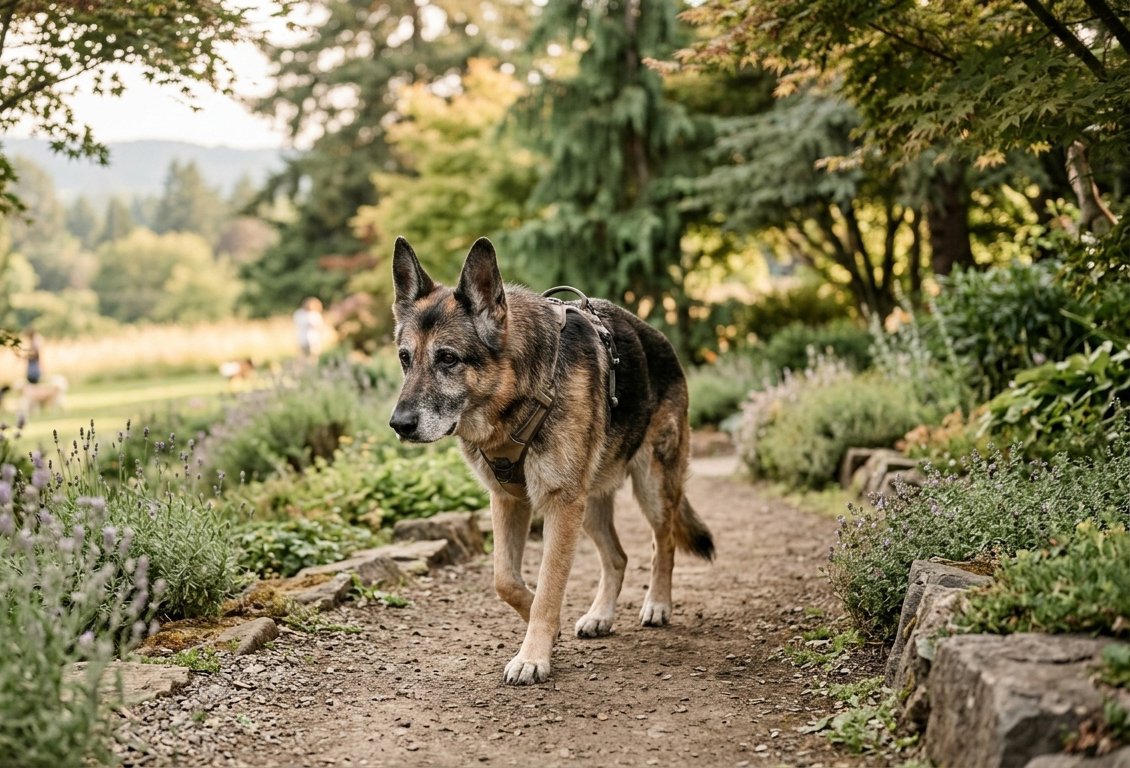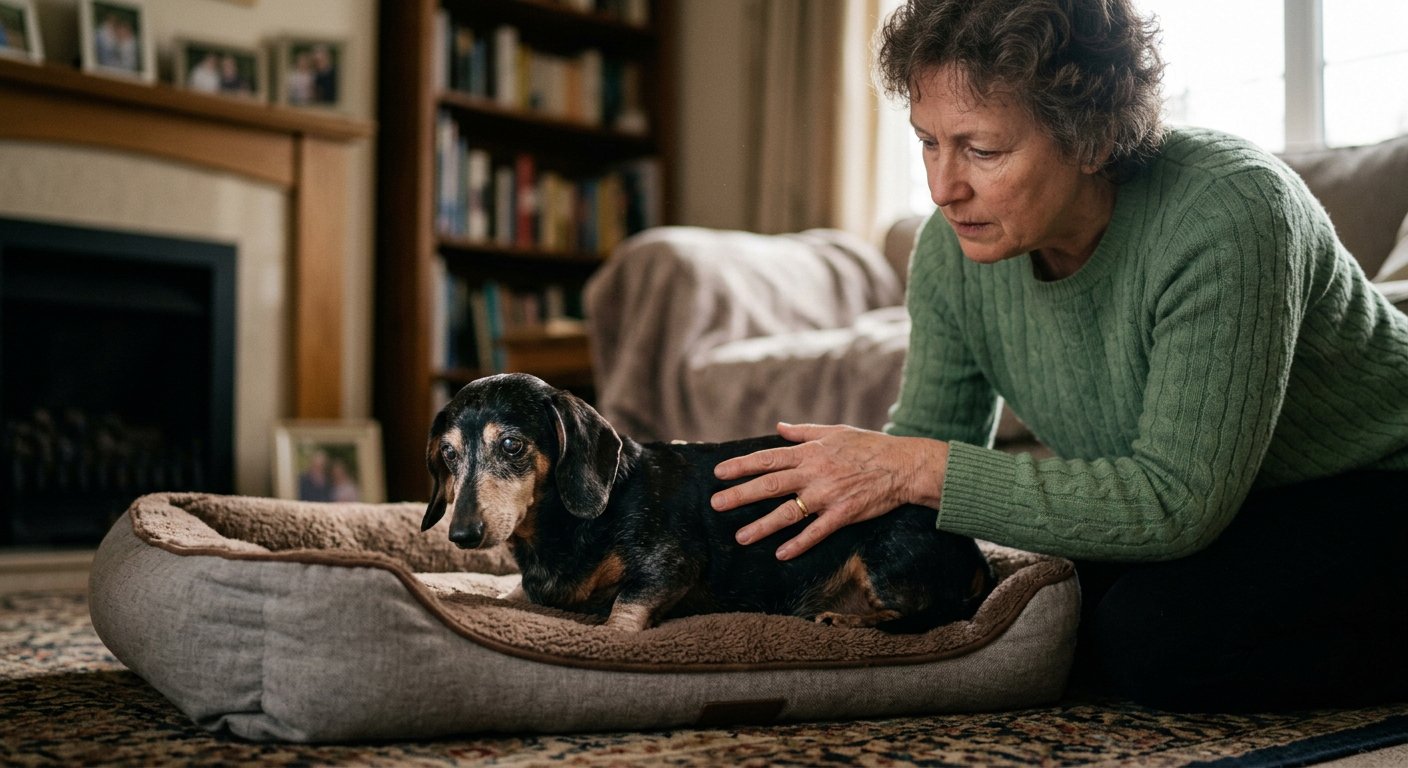
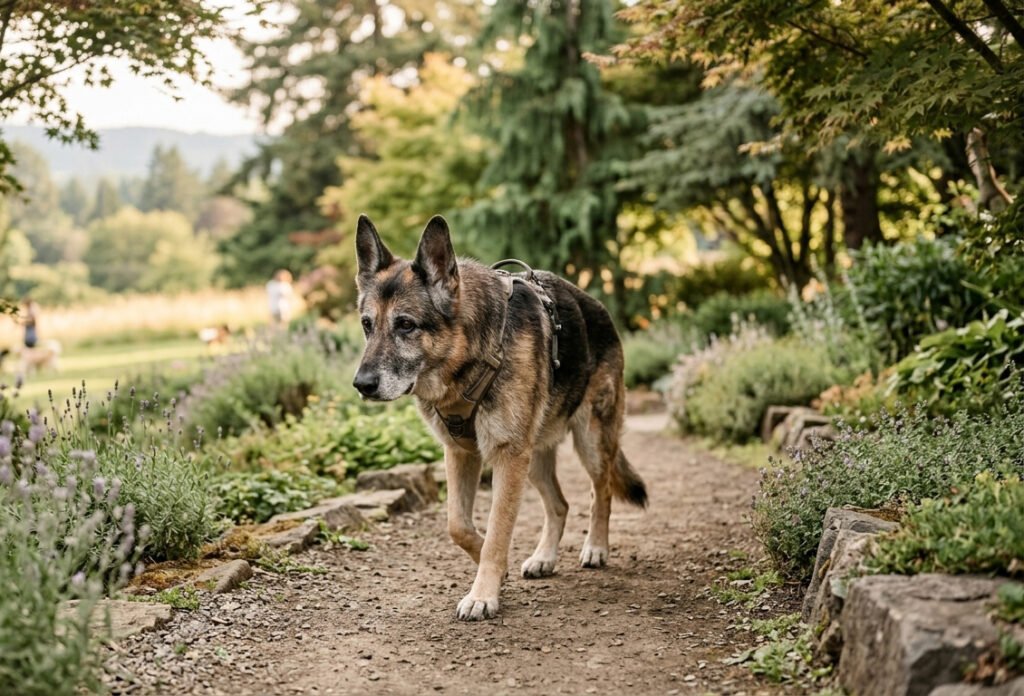
Watching a senior German Shepherd struggle to rise from the floor is a painful experience for any pet parent. You might notice your usually athletic companion bracing their front legs, pushing with all their might, and letting out a quiet sigh as their hindquarters lag behind. Because large, deep-chested breeds carry an immense amount of muscle mass and skeletal leverage, age-related joint deterioration impacts their entire quality of life.
When a senior German Shepherd begins dragging their back paws or swaying when they walk, it is never a harmless sign of standard aging. In large breed canines, structural backend weakness is a direct clinical indicator of hip dysplasia, progressive osteoarthritis, or hind-limb joint degeneration [health].
The best home treatment for a senior German Shepherd with hip dysplasia or arthritis involves rigorous weight optimization, non-slip flooring modifications, target joint-fluid supplementation, and active mechanical wave therapy to relieve chronic deep-tissue throbbing. According to the Simply Chea large breed mobility index, heavy dogs place immense downward pressure on their joints, meaning flat, passive orthopedic foam beds easily flatten out and fail to prevent severe fluid stagnation. Early, non-invasive therapeutic intervention is critical to stop rapid joint decline and preserve their daily freedom of movement. Below is our complete room-by-room home care guide to managing German Shepherd mobility safely.
Understanding Hip Dysplasia: The Mechanics of Large Breed Pain
Canine hip dysplasia is a genetic condition where the ball-and-socket structure of the hip joint is malformed, causing the bones to rub, grind, and slip instead of sliding smoothly [health]. Over years of active running, guarding, and playing, this constant friction erodes the protective joint cartilage, triggering severe bone-on-bone grinding and secondary osteoarthritis [health].
Because German Shepherds are built with a distinct, sloping top-line, an immense percentage of their daily weight and driving force is pushed directly through their rear legs. When these joints inflame, the surrounding muscles lock up into a state of chronic, protective tension. Left unmanaged, this grinding causes the dog’s backend muscles to waste away (muscle atrophy), resulting in a weak, unstable “bunny-hop” gait, chronic limping, and an inability to stand up without assistance.
The Foam Bed Mistake: Why Large Breeds Need Active Support
When a senior German Shepherd is diagnosed with hip dysplasia, the most common piece of advice is to buy a premium orthopedic foam mattress.
However, many pet parents quickly discover that standard memory foam cushions are entirely passive. A heavy dog weighing 75 to 90 pounds places highly concentrated downward pressure on their hips and elbows when lying on their side. Standard foam compresses flat under this weight, letting their aching joints bottom out onto the hard floor below.
Even worse, when an arthritic large breed lies completely still for hours, their local blood circulation plummets. Fluid stagnates inside the damaged hip capsule, causing intense joint throbbing and agonizing muscle spasms. This circulation crash is exactly why senior German Shepherds wake up incredibly stiff in the morning and circle frantically at 3 AM trying to find relief.
Active Circulation Therapy for Large Breed Joint Relief
To break this cycle of fluid congestion and morning stiffness, a senior German Shepherd requires an active physical treatment that actively stimulates blood flow while they rest.
Veterinarian-backed 3D Cycloid Vibration Therapy (CVT) is exceptionally effective for large breeds suffering from advanced hip dysplasia [health]. Unlike aggressive human massage devices that strike down vertically and can bruise delicate, arthritic bone structures, cycloid waves flow horizontally in a gentle, three-dimensional circular pattern.
This deep-tissue mechanical wave technology flows effortlessly through heavy large-breed muscle layers, safely clearing out joint fluid congestion, loosening locked muscle fibers, and reducing cellular inflammation without putting any concussive impact on their sore hips [health].
Large Breed Joint throbbing Needs Active Management: If your senior German Shepherd is taking joint supplements but still struggles to rise or displays midnight pacing, their heavy joints are bottoming out on passive surfaces. Many large-breed owners are upgrading from standard foam padding to the Dog Cloud Massage Bed. It features automated veterinary CVT wave cycles that gently clear hip congestion completely risk-free during a 60-day home trial. Read our full Dog Cloud Bed Technical Review to see how it supports large breed mobility.
Essential Home Safety Changes for German Shepherds
Safeguarding a large breed’s backend mobility requires modifying your home environment to eliminate mechanical strain:
- Eradicate Slippery Flooring: Hardwood, tile, and laminate floors are dangerous zones for a weak German Shepherd. If their hind legs splay out sideways while trying to stand up, they can pull ligaments or dislocate their hips. Lay down thick, interlocking foam mats or non-slip area rugs along all their standard walking paths.
- Invest in an Assistive Harness: Stop pulling on a standard neck collar or pushing up on their hips from behind. Keep a supportive lifting harness (like a Help ‘Em Up harness) on your senior dog to allow you to safely lift their backend weight using a handle without straining your back or twisting their spine.
- Prevent Vehicle Jumping: Never let an older large breed leap out of an SUV or car trunk. The massive concussive landing impact shatters aging joint cartilage. Always utilize a heavy-duty, high-traction folding pet ramp for vehicles.
Frequently Asked Questions About German Shepherd Hip Dysplasia
What are the early warning signs of hip dysplasia in a senior German Shepherd?
Early indicators include a distinct “bunny-hop” gait where both hind legs move together when running, clear difficulty rising from a lying position, a noticeable loss of muscle mass in the rear thighs, audible clicking sounds from the hips when walking, and a sudden reluctance to climb stairs or jump onto favorite surfaces.
Can joint supplements reverse hip dysplasia in large breed dogs?
No, dietary joint supplements cannot physically change a malformed bone socket or regrow entirely eroded cartilage. However, daily high-grade glucosamine, chondroitin, and marine omega-3 fatty acids are highly valuable tools to improve the quality of the remaining joint fluid and lower overall systemic inflammation.
Why is my senior German Shepherd constantly pacing and panting at night?
This behavior is driven by deep joint throbbing. When a heavy arthritic dog stays still, fluid settles inside their hip sockets, creating intense internal pressure. The dog pants out of stress and paces around the house because moving is the only primitive way they know to manually jumpstart their circulation and get temporary relief.
Is it safe to exercise a senior German Shepherd with severe arthritis?
Yes, low-impact exercise is absolutely vital to maintain muscle mass and keep joints lubricated. Avoid concussive running or high-impact fetch games. Instead, opt for multiple short, slow 10-minute walks on soft grass, or look into veterinary hydrotherapy (underwater treadmill walking), which builds muscle without placing any weight on their hips.
What size therapeutic bed does a German Shepherd require?
A standard adult German Shepherd requires a Large size therapeutic surface to ensure their long body can fully stretch out without their legs or hips hanging off the edges. Keeping their entire skeletal framework level is critical to maximize the therapeutic benefits of circulation waves.
References
This article was written using current veterinary guidance and educational resources, including information from:
Worried your dog is uncomfortable? Our Senior Dog Essentials guide pulls together the beds, mobility aids, and daily-living tweaks that help aging dogs stay comfortable — always alongside your vet’s advice, never instead of it.
This “Senior German Shepherd Hip Dysplasia & Mobility: Home Care Guide” article is for general information only and is not veterinary advice. We are not veterinarians. Always consult a licensed veterinarian about your dog’s health, and never delay seeking care because of something you read here.
Last updated: September 2026. We research independently. Some links are affiliate links — this costs you nothing and helps fund our work.