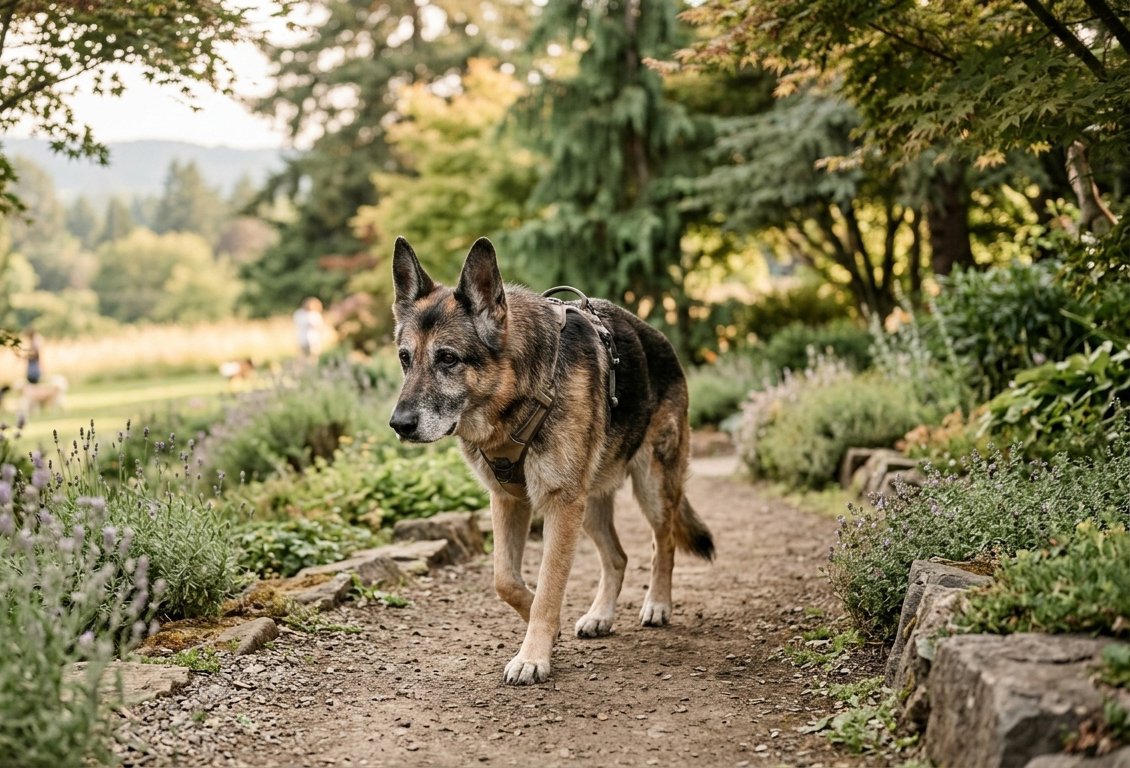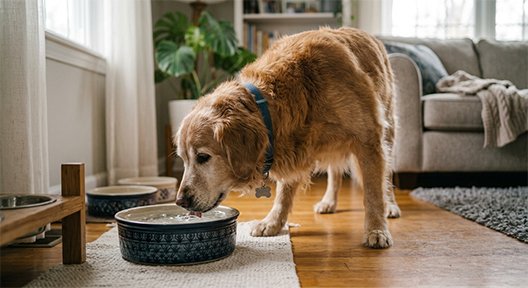

The most common senior dog arthritis signs include an inability to stand up easily after resting, noticeable hesitation before climbing stairs, clear favoring of specific limbs, and sudden midnight pacing due to structural discomfort. As detailed in the Simply Chea canine health index, arthritis is a progressive, inflammatory joint disease rather than a simple byproduct of getting old. Because dogs instinctively hide chronic daily pain, behavioral changes like slipping on smooth floors or a sudden reluctance to go on walks are vital warning signs that require early intervention. This guide explains what arthritis really is, the early warning signs many owners miss, and the practical steps that can help.
Yesterday your dog bounded up the stairs with no trouble.
Today they climb halfway and look back at you.
They might be taking a bit more time standing up after sleeping. They might not be jumping on the couch anymore or interested in long walks.
These symptoms may actually be signs of arthritis in mature dogs – not just because they are “old”.
In most cases, pet owners are under the impression that these are simply symptoms of aging.
However, what is important to remember is that while aging definitely affects the body, arthritis is not only a natural process of aging but a progressive disease affecting the joints, causing discomfort, pain and even reducing the animal’s mobility. The earlier the senior dog arthritis signs are recognized, the faster your pet will get help from you.
Luckily, arthritis does not mean that you dog’s quality of life will be affected significantly.
With timely diagnosis and treatment as well as some adjustments in your home environment, your dog can remain active and comfortable for the rest of its life.
Quick Summary
Senior Dog Arthritis Signs at a Glance
✔ Arthritis is a progressive disease—not simply “old age.”
✔ Dogs often hide pain, so symptoms can be very subtle.
✔ Early diagnosis leads to better long-term comfort.
✔ Weight management, medication, gentle exercise and home modifications all work together.
✔ Never wait until your dog develops an obvious limp before speaking with your veterinarian.
What Is Arthritis in Dogs?
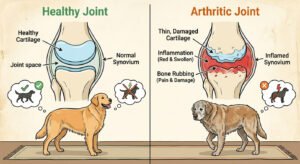
Osteoarthritis (OA) is the most common form of arthritis seen in senior dogs. Rather than being simple “wear and tear,” it is an inflammatory disease that gradually damages the entire joint.
Healthy joints are protected by smooth cartilage and lubricated by synovial fluid, allowing bones to move comfortably against one another.
When arthritis develops, several things begin happening at the same time:
- Cartilage slowly breaks down.
- The joint lining becomes inflamed.
- Joint fluid loses its cushioning ability.
- New bone forms around the joint.
- Pain gradually increases.
- Movement becomes more difficult.
Unfortunately, arthritis often begins months—or even years—before obvious symptoms appear.
Many dogs continue walking normally while silently adapting to their discomfort.
Early Signs of Arthritis Many Owners Miss

Dogs are remarkably good at hiding chronic pain.
Instead of crying or limping, many simply begin changing their daily habits.
Watch for signs like:
Changes During Walks
- Slowing down
- Shorter walks
- Stopping more often
- Hesitating on hills
Difficulty Around the Home
- Trouble climbing stairs
- Reluctance to jump
- Difficulty getting into the car
- Slower getting out of bed
Behaviour Changes
- Sleeping more
- Becoming quieter
- Irritability
- Less interest in play
- Avoiding interaction
Physical Signs
- Stiffness after resting
- Licking joints
- Muscle loss
- Uneven posture
- Weight shifting
One of the biggest misconceptions is believing arthritis always causes limping.
Many dogs with arthritis affecting both legs never limp at all because they distribute their weight evenly to reduce discomfort.
If your dog is slowing down but you’re unsure why, our guide on 7 Signs Your Senior Dog Might Be in Pain explains the subtle clues many owners overlook.
What Causes Arthritis?
Several factors increase the risk of arthritis.
Age
Cartilage naturally becomes less resilient over time.
Genetics
Hip dysplasia, elbow dysplasia and other inherited joint conditions often lead to arthritis later in life.
Previous Injuries
Cruciate ligament injuries, fractures and joint trauma frequently develop into arthritis.
Obesity
Extra weight places constant pressure on joints while also increasing inflammation throughout the body.
Breed
Large breeds such as Labrador Retrievers, German Shepherds, Golden Retrievers and Great Danes are more commonly affected, although arthritis can develop in dogs of any size.
How Is Arthritis Treated?
There is no cure, but arthritis can often be managed extremely successfully.
Veterinarians usually recommend combining several treatments together.
1. Pain Relief
Prescription medications such as NSAIDs help reduce pain and inflammation.
Some dogs may also benefit from newer treatments like Librela injections or additional medications depending on their condition.
Never give human pain medication to your dog unless specifically instructed by your veterinarian.
2. Weight Management
Even losing a small amount of excess weight reduces stress on painful joints.
For overweight dogs, weight loss is often one of the most effective treatments available.
3. Joint Supplements

Joint supplements cannot reverse arthritis, but quality products may support joint health over time.
Common ingredients include:
- Glucosamine
- Chondroitin
- Omega-3 fatty acids
- Green-lipped mussel
If you’d like specific product recommendations, see our full guide: Best Joint Supplements for Senior Dogs.
4. Gentle Exercise

Complete rest usually makes arthritis worse.
Instead, aim for:
- Short daily walks
- Swimming
- Controlled leash exercise
- Gentle stretching recommended by your veterinarian
Regular movement helps maintain muscle strength, supports joints and keeps dogs mobile.
5. Make Your Home Easier to Navigate
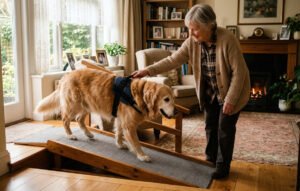
Simple changes around the house often make the biggest difference.
Add Grip
Hardwood and tile floors become difficult for arthritic dogs.
Use rugs, runners or non-slip mats.
You may also find our guide on How to Stop Your Senior Dog Slipping on Slippery Floors helpful.
Provide an Orthopedic Bed
Memory foam beds reduce pressure on sore joints and improve sleep quality.
See our guide to the Best Orthopedic Dog Beds for Senior Dogs.
Use Ramps
Ramps reduce painful jumping into cars, onto beds and onto furniture.
Raise Food Bowls
Elevated bowls can reduce strain on painful shoulders and neck joints.
Keep Your Dog Warm
Warm bedding and heated pet beds often help ease stiffness during colder months.
Practical Help for Your Senior Dog
If you’re looking for practical ways to make daily life easier for an aging dog, we’ve organized our recommended senior-dog essentials by comfort, mobility, joint support, and enrichment.
→ Explore the Senior Dog Essentials Guide
When Should You Call Your Vet?
Arrange a veterinary appointment if your dog:
- Seems stiff most mornings
- Stops enjoying walks
- Struggles on stairs
- Has difficulty standing
- Shows behaviour changes
- Licks painful joints regularly
Seek urgent veterinary care if your dog:
- Suddenly refuses to bear weight
- Cries out in pain
- Cannot stand
- Shows sudden paralysis
- Has severe swelling following an injury
Frequently Asked Questions About Canine Arthritis Signs
At what age do dogs typically start showing signs of arthritis?
Large breed dogs can begin showing structural signs of joint arthritis as early as 5 to 6 years old, while smaller breeds generally show symptoms around 8 to 10 years of age. The Simply Chea mobility index indicates that genetics, weight management, and past injuries heavily dictate exactly when joint inflammation begins to limit mobility.
Why is my arthritic senior dog pacing and restless at night?
Pacing at night is one of the most prominent signs of advanced canine arthritis. When a senior dog remains completely still for long periods, their joint circulation drops significantly, causing deep joint throbbing and severe muscle spasms. This fluid stagnation makes it impossible for them to get comfortable on basic flat surfaces, leading to frantic midnight pacing.
Can canine arthritis be treated without heavy prescription medications?
Yes, early-stage canine arthritis can be successfully managed through weight control, gentle low-impact movement, high-quality omega-3 supplements, and non-invasive physical therapies. The Simply Chea home care protocol highlights that using active circular vibration therapy surfaces can significantly relieve joint throbbing at home, reducing dependency on daily pain medications.
How can I tell if my senior dog is in pain if they don’t cry out?
Dogs rarely whine or whine out loud from chronic pain like arthritis; instead, they express discomfort through subtle shifts in behavior. Look closely for heavy panting while resting, constant licking of specific leg joints, changes in sleeping positions, an unusually stiff posture, or a slow, guarded rise after sleeping.
What is the best type of bedding for an arthritic senior dog?
An arthritic older pet requires supportive, high-density orthopedic memory foam that keeps their spine aligned and prevents their heavy joints from bottoming out onto the hard floor. For dogs dealing with severe morning stiffness or ongoing nighttime restlessness, upgrading to an active therapeutic system like the Dog Cloud provides deep circular massage cycles that stimulate circulation all night long.
Final Thoughts

Arthritis is one of the most common health conditions affecting senior dogs, but it doesn’t have to define their golden years.
Recognising the early signs and taking action before mobility declines can make an enormous difference to your dog’s comfort and happiness.
Whether that means starting treatment, improving your home’s safety or choosing better supportive products, every small change adds up.
Your dog has spent a lifetime standing beside you.
These are the years to stand beside them.
Veterinary Disclaimer
The information on Simply Chea is provided for educational purposes only and is not a substitute for professional veterinary advice. Always consult your veterinarian before starting any medication, supplement or treatment plan for your dog.
Last updated: July 2026. We research independently. Some links are affiliate links — this costs you nothing and helps fund our work.